Tuesday, 26 November 2013

Sunday, 24 November 2013
My Favourite Opening Title Sequence
Video coverage of my doing a presentation on my favourite title sequence:
Wednesday, 20 November 2013
Tuesday, 19 November 2013
Evaluation of Saul Bass Anatomy of a Murder inspired piece (not final)
My group took pictures of individual pieces of papers, a head, body, and legs, so we can create a similar piece to the Saul Bass Anatomy of a Murder opening title sequence.
What went well:
We was able to create out own style and unique version.
What went well:
We was able to create out own style and unique version.
Wednesday, 13 November 2013
Saul Bass
Saul Bass was graphic designer known for his designs of Film Posters and Title Sequences.
During his 40 year career he created Titles for directors including Hitchcock and Scorsese
During his 40 year career he created Titles for directors including Hitchcock and Scorsese
Monday, 11 November 2013
Thursday, 7 November 2013
Themes and Styles
A theme is the underlying idea that exists in a subject that acts like a foundation for a particular piece of work or are or medium. In title sequences there are may be a key theme in the film that is then reflected in the title sequence. Dexter, is an example of this show below:
In the sequence it show symbolic codes of reds which has connotations of death which relates to the programme as Dexter is blood splatter analyst as serial killer. Furthermore there a lot of enigma codes created from the fact that you see the theme if red shown in him shaving where he actually cuts himself. However there is other times where you see what we see as ketchup however, due to the film and the music making the sequence sound sinister you start to to question your self if that is actually ketchup as you don't see him put the ketchup on the roll.

The enigma codes also used American Psycho as well where we are provoked on questioning ourselves.
Narrative themes:
While a Style relates to the method and asthmatics, this is how the theme is created and put together using certain effects. A style is symbolic in other words how something is visually created, like what editing techniques and effects it uses such as for example in Superbad they use the silhouette effect and a grainy effect which represents the quality of films in that era the 70s even though the film itself want film in that time, this is called a flicker effect.
The enigma codes also used American Psycho as well where we are provoked on questioning ourselves.
Narrative themes:
While a Style relates to the method and asthmatics, this is how the theme is created and put together using certain effects. A style is symbolic in other words how something is visually created, like what editing techniques and effects it uses such as for example in Superbad they use the silhouette effect and a grainy effect which represents the quality of films in that era the 70s even though the film itself want film in that time, this is called a flicker effect.
Tuesday, 5 November 2013
James Bond: 50 Years of Main Title Design
This video In found very useful as its about the different title sequences over the last 50 years for James Bond. It shows different techniques, themes and styles which I find very important for the later stage in my coursework
Opening Credits and Title Sequence (in relation to films)
However, a 'Title Sequence' is a sequence which is separated from the main action of the film for example in 'True Blood'.
Many films have used opening credits, but one great film which has clearly demonstrated this is 'Superman', this is shown below:
A 'cold opening' is another form of sequence where the film doesn't have an opening credit.
An 'Opening title sequence' is when both the opening credits and the title sequence are both incorporated into the beginning of the film.
Sometimes film break the normal conventions of a traditional opening for a more elaborate abstract title sequence.
In an opening sequence different editing techniques, sound techniques and animations can be used. For example, sometimes non traditional transitions such as wipe are used in opening sequences but not in the film itself. Diegetic and Non-Diegetic sound is tend to be used along with soundtracks or the theme tune which we associate with that film or series with, for example 'Star Wars'.
The film opening is very important because it sets the scene and shows the viewer where the it is based and what roughly is going on in the movie or what happened in the past and how we got to where we are now. An establishing shot presents to viewers the setting of the film.
Wednesday, 23 October 2013
Evaluation of the Opening Title Sequence to CSI: London
In the Opening Title Sequence task we had to to produce an fictional Opening Title to CSI: London. This involved the class, who were split into 2 groups, to film parts which will be included in the title sequence. These parts included shots of the characters doing something, such as looking through a microscope and also close ups of the characters as well. Then after will had done the filming, the coverage was then imported, to edit along with footage Mr Coppard had found, which we could include. Furthermore, sir also provided us with a soundtrack to go over the footage. Are main inspiration was from CSI: Miami's opening title sequence, and we based a lot of our ideas on it. This video is hown below (CSI: Miami):
What went well is that we were able to film all that we needed to film. We were able to film in the locations we wanted to be in, such as the Science rooms, making it look like a lab, which looks realistic, in context to the theme. We were able to access the props we needed, such as the fake gun and a microscope. Furthermore, the editing went well as I was able to comfortably edit the the footage, due to everything was filmed correctly.
What we could of improved on is that when editing, I could of included more effects, to make the Sequence look more professional. One reason why I didn't do so, is that the I didn't know how to do the effects I wanted to do, correctly and effectively. along side the fact that i unfortunately have enough time to figure it out. However, next time when I opening sequence, i will now look to include the effects and make my final product better.
What went well is that we were able to film all that we needed to film. We were able to film in the locations we wanted to be in, such as the Science rooms, making it look like a lab, which looks realistic, in context to the theme. We were able to access the props we needed, such as the fake gun and a microscope. Furthermore, the editing went well as I was able to comfortably edit the the footage, due to everything was filmed correctly.
What we could of improved on is that when editing, I could of included more effects, to make the Sequence look more professional. One reason why I didn't do so, is that the I didn't know how to do the effects I wanted to do, correctly and effectively. along side the fact that i unfortunately have enough time to figure it out. However, next time when I opening sequence, i will now look to include the effects and make my final product better.
Tuesday, 22 October 2013
Evaluation of Preliminary Task
In the Preliminary task we had to to produce a continuity task involving filming and editing a character opening a door, crossing a room and sitting down in a chair opposite another character with whom she/he then exchanges a couple of lines of dialogue. In addition, the task should show and demonstrate match on action, shot/reverse shot and the 180 degree.
In my group, the theme of our film was a parents evening, where a parent (me) is walking through a door, then opens the door of the classroom, then sits down and speaks to the teacher about the parents son's behaviour.
What went well is that we were able to demonstrate match on action (when the parent was opening the door), shot/reverse shot (the dialogue between the parent and teacher), and not breaking 180 degree. Furthermore, the editing went well as i was able to comfortably edit the the footage, as everything was filmed correctly.
What we could of improved on is that when filming we just done a minimum of 5 takes for each section we were filming. Instead at the beginning we kept on rewinded to view the takes then forward, which caused as complications with uploading. Furthermore, we didn't leave enough space for us to edit, as we didn't leave the camera to record shortly before we stated filming the actual take.
However we learnt from our mistakes, and furtherm on in filming rectified this.
In my group, the theme of our film was a parents evening, where a parent (me) is walking through a door, then opens the door of the classroom, then sits down and speaks to the teacher about the parents son's behaviour.
What went well is that we were able to demonstrate match on action (when the parent was opening the door), shot/reverse shot (the dialogue between the parent and teacher), and not breaking 180 degree. Furthermore, the editing went well as i was able to comfortably edit the the footage, as everything was filmed correctly.
What we could of improved on is that when filming we just done a minimum of 5 takes for each section we were filming. Instead at the beginning we kept on rewinded to view the takes then forward, which caused as complications with uploading. Furthermore, we didn't leave enough space for us to edit, as we didn't leave the camera to record shortly before we stated filming the actual take.
However we learnt from our mistakes, and furtherm on in filming rectified this.
Thursday, 17 October 2013
Preliminary task
In the Preliminary task we had to to produce a continuity task involving filming and editing a character opening a door, crossing a room and sitting down in a chair opposite another character with whom she/he then exchanges a couple of lines of dialogue. In addition, the task should show and demonstrate match on action, shot/reverse shot and the 180 degree.
In my group, the theme of our film was a parents evening, where a parent (me) is walking through a door, then opens the door of the classroom, then sits down and speaks to the teacher about the parents son's behaviour.
What went well is that we were able to demonstrate match on action (when the parent was opening the door), shot/reverse shot (the dialogue between the parent and teacher), and not breaking 180 degree. Furthermore, the editing went well as i was able to comfortably edit the the footage, as everything was filmed correctly.
In my group, the theme of our film was a parents evening, where a parent (me) is walking through a door, then opens the door of the classroom, then sits down and speaks to the teacher about the parents son's behaviour.
What went well is that we were able to demonstrate match on action (when the parent was opening the door), shot/reverse shot (the dialogue between the parent and teacher), and not breaking 180 degree. Furthermore, the editing went well as i was able to comfortably edit the the footage, as everything was filmed correctly.
Tuesday, 15 October 2013
Continuity Task Evaluation
In the continuity task we had to edit footage provided to us by year 13's. The main aim as to make a video suitable and correct continuity task, which we had to make sure they weren't any jumps.
What went well is that i was able to put all the footage in order and edit to make it a suitable continuity task.
What we could of improved on is that I could of been more precise on my editing.
What went well is that i was able to put all the footage in order and edit to make it a suitable continuity task.
What we could of improved on is that I could of been more precise on my editing.
Continuity Editing Task
In the continuity task, we edited footage filmed by the year 13's (A2 Media Studies). We were given rough footage, which was not edited, and we had to put this rough footage in order and edit it. We identified along the way, that a lot if the footage had errors and mistakes such as breaking the 180 degree rule and jump cuts (which shouldn't be used in a continuity task). So to rectify this problem we had to edit and cut pieces out in order for the film to flow.
After, we then put our own take on the film, editing it as how we want. As there was a lot of footage, this gave us a lot to work and play around with, to make good film which follows by all the rules in filming. Furthermore, one of the transitions which had to be shown is the 'match on action'. As we were given rough footage, we had to correctly identify the footage which can be used in the match on action then edit that footage for it to correctly represent a match on action transition.
Below is the video that I produced:
After, we then put our own take on the film, editing it as how we want. As there was a lot of footage, this gave us a lot to work and play around with, to make good film which follows by all the rules in filming. Furthermore, one of the transitions which had to be shown is the 'match on action'. As we were given rough footage, we had to correctly identify the footage which can be used in the match on action then edit that footage for it to correctly represent a match on action transition.
Below is the video that I produced:
Wednesday, 2 October 2013
The 180 degree rule
In filming, The 180 degree rule is a rule that specifies where the camera can be positioned in order to not confuse the audience and for the scene to make sense. It is commonly used to focus on the dialogue in the scene, between two people, capturing the characters at different perspectives, showing each others emotions. For example, this is commonly used when two characters are talking face to face. At the beginning of a scene, a long shot, mid shot or an extreme long shot can used to establish the setting and surroundings of that scene as well as the two characters, one character on the left and one on the right. Throughout the scene, the person on the left has to stay on our left and the other character has to stay on the right. Therefore, you cannot go any further than 180 degrees as the characters positions will seem to change and shift, and this can confuse and not make sense to many of the audience. the images below visually explain this:

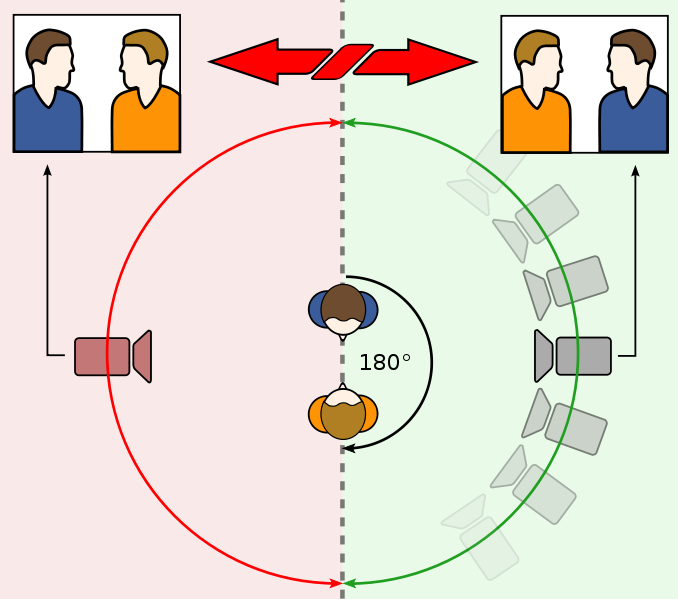
Furthermore, another way for you to abide by the 180 degree ruke, is by using other filming techniques such as tracking. When used to correctly within the rule, tracking can be effectively used to show the 180 degree rule.
In lesson we made a photographic demonstration of the 180 degree rule, and what shot types we used. Below is the demonstration:

As you can see we have followed by the rule by not crossing over the 180 degree line.
The tasks I have taken out before such as planning an aerial view of our 180 degree task shown above and actually carrying out the task itself, has impacted on our planning for our preliminary task because we know now how to plan for this task using the 180 degree rule aerial view plan and use the skills we used in the task such as establishing shot, over the shoulder and reverse shot which we will use in the preliminary task. Furthermore, we will be more comfortable with using the camera as we may have not used a camera like that before. So now we know how to position the camera in order for the shots to be taken correctly and effectively.

Furthermore, another way for you to abide by the 180 degree ruke, is by using other filming techniques such as tracking. When used to correctly within the rule, tracking can be effectively used to show the 180 degree rule.
In lesson we made a photographic demonstration of the 180 degree rule, and what shot types we used. Below is the demonstration:

As you can see we have followed by the rule by not crossing over the 180 degree line.
The tasks I have taken out before such as planning an aerial view of our 180 degree task shown above and actually carrying out the task itself, has impacted on our planning for our preliminary task because we know now how to plan for this task using the 180 degree rule aerial view plan and use the skills we used in the task such as establishing shot, over the shoulder and reverse shot which we will use in the preliminary task. Furthermore, we will be more comfortable with using the camera as we may have not used a camera like that before. So now we know how to position the camera in order for the shots to be taken correctly and effectively.
Wednesday, 25 September 2013
Sound Techniques
Dialogue
Dialogue conversation between two or more people.
Diegetic sound
Any noise that is made in the scene. Furthermore, the
character in the scene can hear the sound. it is sound is the sound surrounding
the character such as dialogue and movement.
Non- Diegetic sound
Sounds that the character cannot hear, is called non-digetic.
For example, the sound track or the narrator over the scene is a non diegetic
sound.
An example of diegetic and non-diegetic sound is from Jaws, when the shark attacks the people in the sea by the beach. to view this video click on it below:
Sound Motif
A sound that becomes associated with a person, thing or programme.
Every time you hear the sound you think of association. For example the Eastenders theme tune.
Synchronous Sound
The visual seems to move at the same time as the sound, they
match. For example, in music videos, people move in time with the music. Sometimes
the sound can be diegetic or non-diegetic sounds.
Contrapuntal Sound
Sound that does not match what you can see, it sounds
inappropriate and does not fit the feel of the visual. It changes the feel of
the scene. A Pop music used in a funeral. below is an example of contrapuntal sound:
Voice Over
A narrator or character is speaking over the scene so you
mainly hear their voice.
Soundtrack
The piece of music played of the scene or trailer to create
dramatic effects.
Ambient Sound
Everyday noises that you hear in the background of a scene. They are used to make the scene more
realistic. For example, if you are in your room and you can hear the cars
outside.
Sound Perspective
Sound perspective refers to the apparent distance of a sound
Clues to the distance of the source include the volume of
the sound and the balance with the other sounds, the frequency range (high
frequencies may be lost at a distance).
Mode of address
This is where the narrator addresses the audience directly,
often-confiding information or insights not available to the characters in the
piece. This information is often taken as authoritative by the audience, and can
effect the way they relate to the characters.
Sound Bridge
Sound bridges can lead in or out of a scene.
They can occur at the beginning of one scene when the sound
form the previous scene carries over briefly before the sound begins. Below is a example of a sound bridge on a scene from 39 steps, where towards the end, demonstrates a sound bridge:
Tuesday, 24 September 2013
Narrative Theory
What is narrative?
In media terms, narrative is the
organisation given to a series of facts. Everything in media has a narrative.
Our mind requires narrative in order to make sense of things. We
connect events and make an understanding based on the links. In everything we
seek a beginning, middle and end. We understand and create meaning using your
texts. Each text becomes part of the previous.
Many people get confused between the story and the narrative. The story
is a sequence of events known as the plot, while the narrative is the way those
events are put together, to be presented to us, the audience.
When looking into narrative you also need to think about what the
story is about in its most basic terms, the theme, for example Love or war etc.
Narratives can be re used and have been re used a lot especially
in super hero movies and in romantic movies as well
There are 4 different theorists, who have been very influential
in the world of media.
Todorov
Todorov
was a Bulgarian philosopher who proposed that all narratives falls into
standard 3 part structure:
- They begin with equilibrium, where everything is balanced
- Then disequilibrium, this is when something comes along to disrupt that equilibrium
- Finally, is the resolution, which is a new equilibrium
Syd Field
Syd
Field is regarded by many Hollywood professionals to be the leading authority I
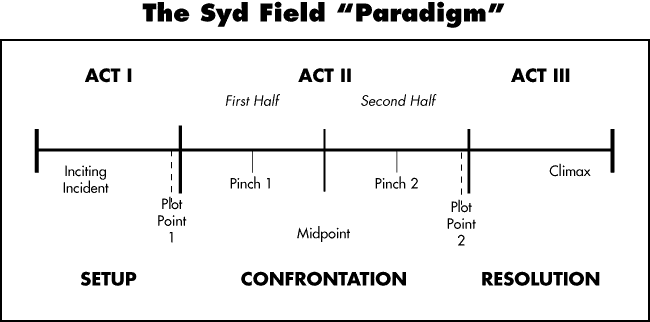
the art. He believes a narrative is split onto 3 acts. This is based on Todorovs
theory but Filed has had his own take to it. Below is an example of Syd Field's narrative structure:
Vladmir
Propp was a Russian formalist who analyzed the basic plot components of Russian
folk tales to identify their simplest irreducible narrative elements.
Propp
constructed a list of 31 functions and character types:
The Hero: leads the
narrative, is usually looking for something like a quest or trying to solve something
like a mystery. Examples of heroes are: Superman and Batman, who are well
known. Even though a hero has been thought to be only male, there are females
who also play a part in being a hero such as Wonder Woman and Catwoman.

 |
| The Joker in 'Batman' |
The Doner: gives the hero something, like a special power, ability, which aids them complete their quest. For example, like in Star Wars, Obi-wan Kenobi mentored and taught Luke Skywalker everything, so that he could become a jedi. Another example, in Iron, the doctor who built a device which kept Tony Stark (Ironman) alive; it acted as a heart. Then he went on to become Ironman form then.
The Princess:
is usually a pride or reward for the hero. However, if the hero is female,
there can ebbs a price but this is unusual. An example is, is Princess Fiona in Shrek, when Shrek had to rescue her.
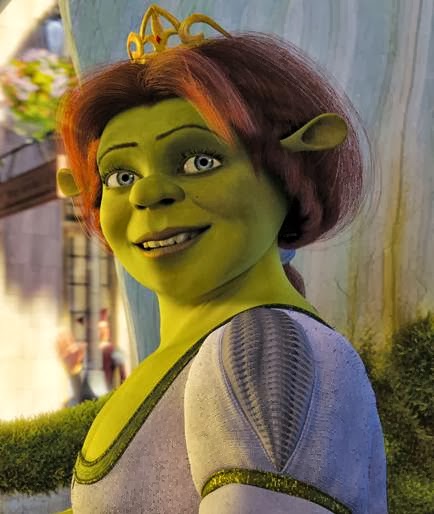 |
| Princess Fiona in 'Skrek' |
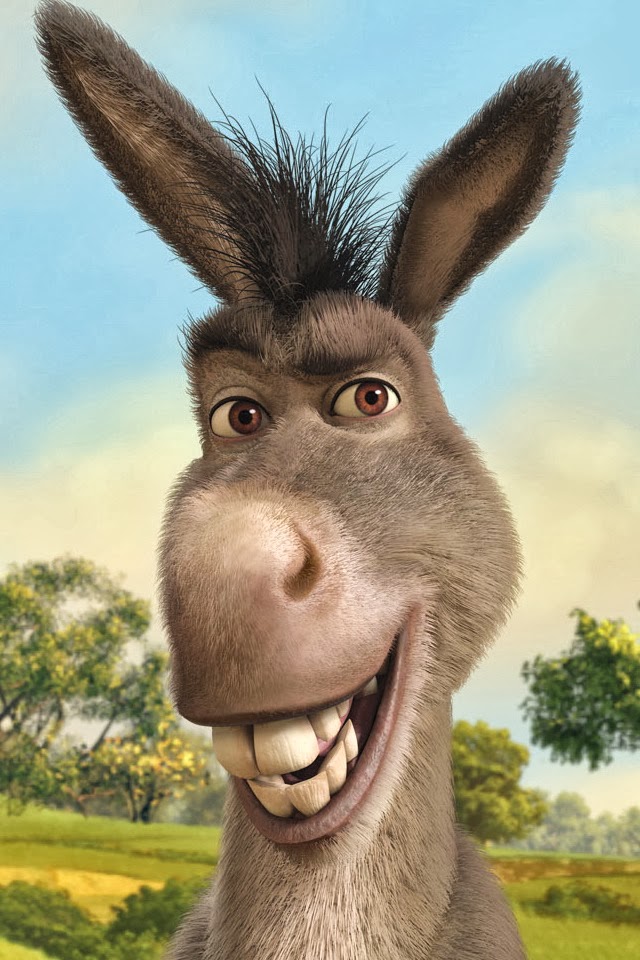 |
| Donkey in 'Skrek' |
The Princes’ Fathers: a figure who lays down authority and who offers a reward to the hero for completing their quest. That reward might be the prince or the princess or in some cases money, because the princess’ father can be seen as a false hero.
The False Hero:
the false hero takes credit for the hero has done, taking credit for his actions,
if though he didn’t do anything. Furthermore or he tries to marry the princess
to someone she may not like or favour. For example, when Princess Fiona was forced to marry Prince Charming, and in the film he was trying to make out he was
the hero.
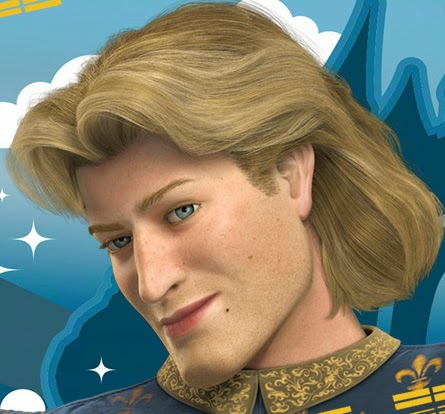 |
| Prince Charming in 'Skrek' |
The Dispatcher: the character who sets the hero off.
Another narrative theory is Roland Barthes'.
Roland Barthes
Roland Barthes was a french semiologist. he suggested that narrative works with five different codes which motivates the reader to make sense of it.
Barthes Codes:
Action - a narrative device which a resolution by produced through action. for example a shoot out
Enigma - a narrative device that teases the audience by presenting a puzzle or riddle to be solved. This works very well as it makes the ending of the story very pleasurable.
Symbolic - (connotation)
Semic - (denotation)
Cultural - a narrative device which the audience can recognize as being part of a culture. For example, the culture 'made man' in a gangster film.
When a narrative is constructed in the order of events it is called Linear. However, when a narrative is constructed out of order, meaning it may go back and forward in time or have flashbacks, this is called Non-Linear.
Another narrative theory I learnt about was Claude Levi-Strauss' theory called the 'Binary Opposition'
Levi-Strauss was a social anthropologist. He studied myths of tribal culture. He examined how stories unconsciously reflect the values, beliefs and myths of a culture. These are usually expressed by the form of binary opposition. His research has adopted media theorists to reveal underlying themes and symbolic oppositions media texts.
These are xamples of Levi-Strauss; theory:
Homesteads Vs Native America
Christians Vs Pagans
Domestic Vs Savage
Weak vs Strong
Garden Vs Wilderness
Inside Society Vs Outside Society
Subscribe to:
Posts (Atom)